My search results all agree: this is, as NH posted, New York City circa 1905. Further, it’s the Manhattan entrance to the Brooklyn Bridge. A couple of sites add that it’s also the street railroad terminal.
What nobody says, that I could find, is where other traffic goes, besides pedestrians. Surely horsedrawn vehicles and some early cars were crossing the bridge?
He is variously known as the “Spirit of Light” or the “Spirit of Energy” and adorns Syracuse, New York’s 1932 Niagara-Mohawk Power Building, once the largest utility company building in the country, and a prime example of Art Deco architecture.
A 1950 DAF -Domburg Diesel Bus, 1st series, with slide out engine… designed, indeed, for mechanics to have an easier time working on.
Not being a mechanic, I have a question for you car guys. Excuse any ignorance, pretty please.
If the engine just slides out like that, I suppose things like the fuel pump could come with it? But how do parts like the intake and exhaust manifolds and the drive shaft stay attached?
No, I have no idea why I want to know. I just looked at it and thought, “how are they not pulling the bus to pieces?” So now I’m curious.
The fuel pump would be mechanical, and attached to the engine, in-tank fuel pumps weren’t a thing in those days, so yes, the fuel pump would come out with it. The fuel lines, control cables, propshaft, and exhaust pipe, would have to be unbolted from the engine assembly. As the engine is designed to be easily(!) removable, the connections to said parts would be made fairly accessible, and things like the exhaust would be (Probably) a flange-and-clamp arrangement. The propshaft would probably be a sliding, splined, joint.
When I was on the tools, we had a type of 33kV tap-changer (Voltage regulator) that was a swine to work on, I always ended up with blood running down my arms from reaching into the unit (From the top) because of the tight clearances. The factory proscribed method was to unbolt all the HV electrical connections (54 of them), unbolt the driveshaft and mounting bolts, and lift the whole unit out of the tank and work on it on the bench. Working on them out of the tank was simple, and easy. Unbolting the 54 HV connections, and reattaching them later, was worse than working on the unit in situ. When I see words like “Designed to be easily removed for maintenance” it reminds me of working on the Fuller 317 Tap-changer.
Among others, I found the 454 cu in Corvettes and 289 cu in Sunbeam Tigers to be a bit of a squeeze. Loved the old Chevy 6-cylinder pickups where I could climb into the engine compartment to work on them.
They forget.
When the War ended in Europe, some of the children there cried because they were afraid of this thing called “Peace”, because they had never experienced it.
Never forget.

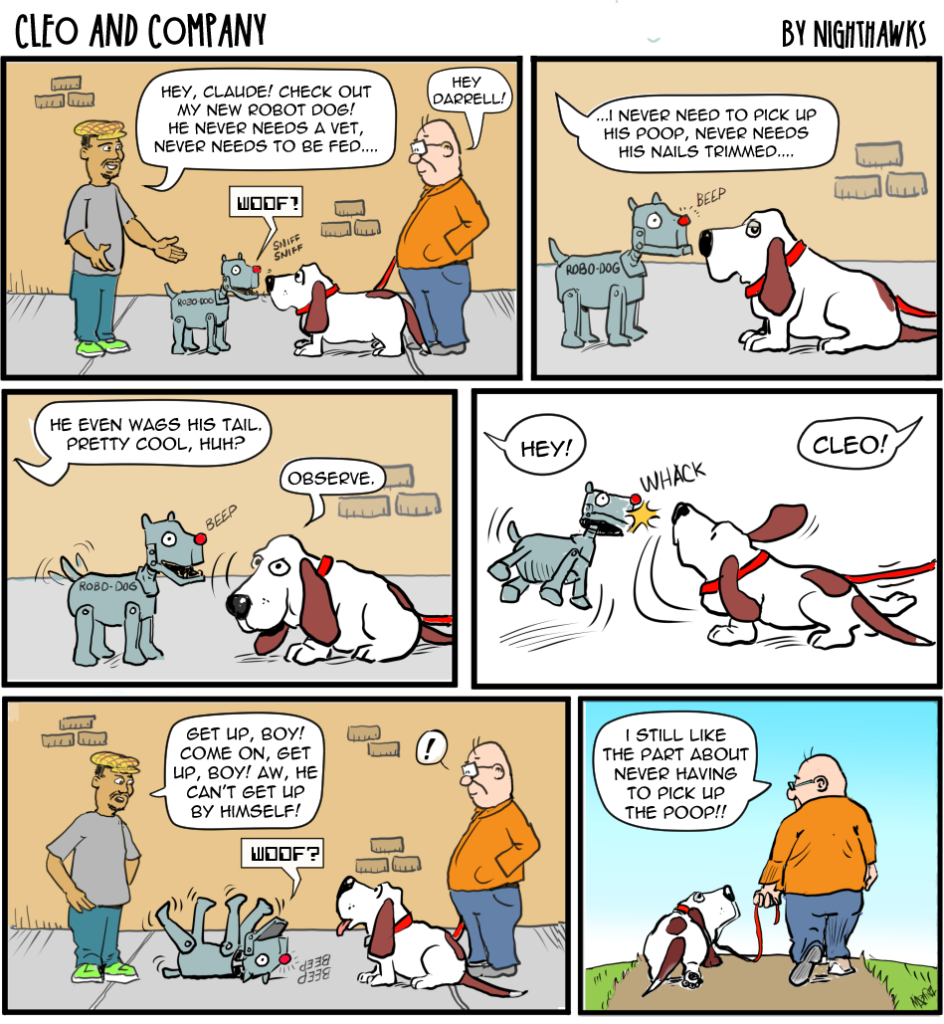
,
And what kind of mood are we in right now?
I didn’t just fall off the turnip truck; that ain’t no Basset Hound!
Love the fangs.
Actually the lower “canines”.
,,
Everybody is dancing in the raindrops.
,,,
NYC 1905
My search results all agree: this is, as NH posted, New York City circa 1905. Further, it’s the Manhattan entrance to the Brooklyn Bridge. A couple of sites add that it’s also the street railroad terminal.
What nobody says, that I could find, is where other traffic goes, besides pedestrians. Surely horsedrawn vehicles and some early cars were crossing the bridge?
My first thought was it was a railroad terminus, given the style. The route to the bridge is probably out of shot.
,,,,
love that art deco … bravo
He is variously known as the “Spirit of Light” or the “Spirit of Energy” and adorns Syracuse, New York’s 1932 Niagara-Mohawk Power Building, once the largest utility company building in the country, and a prime example of Art Deco architecture.
.
Anoia, Goddess of Things That Get Stuck in Drawers would love that arrangement!
Any mechanic would love that arrangement.
A 1950 DAF -Domburg Diesel Bus, 1st series, with slide out engine… designed, indeed, for mechanics to have an easier time working on.
Not being a mechanic, I have a question for you car guys. Excuse any ignorance, pretty please.
If the engine just slides out like that, I suppose things like the fuel pump could come with it? But how do parts like the intake and exhaust manifolds and the drive shaft stay attached?
No, I have no idea why I want to know. I just looked at it and thought, “how are they not pulling the bus to pieces?” So now I’m curious.
Valid questions!
The fuel pump would be mechanical, and attached to the engine, in-tank fuel pumps weren’t a thing in those days, so yes, the fuel pump would come out with it. The fuel lines, control cables, propshaft, and exhaust pipe, would have to be unbolted from the engine assembly. As the engine is designed to be easily(!) removable, the connections to said parts would be made fairly accessible, and things like the exhaust would be (Probably) a flange-and-clamp arrangement. The propshaft would probably be a sliding, splined, joint.
When I was on the tools, we had a type of 33kV tap-changer (Voltage regulator) that was a swine to work on, I always ended up with blood running down my arms from reaching into the unit (From the top) because of the tight clearances. The factory proscribed method was to unbolt all the HV electrical connections (54 of them), unbolt the driveshaft and mounting bolts, and lift the whole unit out of the tank and work on it on the bench. Working on them out of the tank was simple, and easy. Unbolting the 54 HV connections, and reattaching them later, was worse than working on the unit in situ. When I see words like “Designed to be easily removed for maintenance” it reminds me of working on the Fuller 317 Tap-changer.
Among others, I found the 454 cu in Corvettes and 289 cu in Sunbeam Tigers to be a bit of a squeeze. Loved the old Chevy 6-cylinder pickups where I could climb into the engine compartment to work on them.
…
IIRC there is quite a dramatic story behind this image.
,..
It’s not hidden too well.
Or at all, IMHO.
,,..
A study of Light” and “Shadow”…
.,
At least they weren’t having the crap bombed out of them every night like London was.
They forget.
When the War ended in Europe, some of the children there cried because they were afraid of this thing called “Peace”, because they had never experienced it.
Never forget.
.,,.,,
,.
I’m thinking he must have taken an origami class.
Look at that focus.
I have seen this picture but from a straight-on view ?
same scene ?
Similar. Maybe they’re twins? 😉
Same focus.
,,..
Oh, I have slipped the surly bonds of earth….
,
Way too true, no matter which country.
Or what year.
,,,,
DANGER! DANGER WILL ROBINSON! WARNING! WARNING! DANGER!
Somebody is going to need some new barbed wire fence. Somebody else is going to need some new underwear.
,,
Self portraits, taken in a photo booth, in 1947.
Male Lesser Goldfinch.
Susanna Hoffs (From The Bangles) does a good version (Well, I think so anyhoo!) of Linda Ronstadt/Stone Ponys ‘Different Drum’.
Actually, it was written by this guy.
Poop was a big part of my last job. With five pets it still is.
I know – having taken care of my sister 24/7 without pay…